
Ready to transform your body? Let's start with what's actually possible in 12 months. For beginners, you can expect to gain 10-20 pounds of lean muscle in your first year of consistent training, according to research from the National Academy of Sports Medicine. That's about 1-2 pounds of muscle per month - steady progress that adds up over time.
Weight loss goals follow a similar pattern. A healthy, sustainable rate is 1-2 pounds per week, potentially leading to 50-100 pounds lost over a year. The Rowlett Transformation Center confirms this approach helps maintain muscle mass while shedding fat.
Your transformation speed depends on several key factors. Age plays a significant role - younger individuals typically see faster results due to higher testosterone levels and faster recovery. Genetics influence how your body responds to exercise and nutrition. Your starting point matters too - those new to fitness often see dramatic changes in the first few months.
Visible changes typically follow a predictable timeline. You'll notice strength gains within the first month. Physical changes become apparent around week 8-12, according to Imanitribe's transformation research. By month 6, others will definitely notice your progress. The final six months are crucial for cementing these changes and pushing through plateaus.
Remember, consistency beats intensity. Focus on sustainable habits rather than extreme measures. Track your progress with photos and measurements every 4-6 weeks. This helps you stay motivated when the scale doesn't tell the whole story.
Set mini-goals along your journey. Celebrate hitting your first pull-up, running a mile without stopping, or fitting into smaller clothes. These victories keep you focused on progress rather than perfection.
Understanding Achievable Results
Ready to transform your body? Let's set realistic expectations that will keep you motivated throughout your journey. Research shows that beginners can gain 10-20 pounds of lean muscle in their first year of consistent training, according to the National Academy of Sports Medicine. That's about 1-2 pounds of muscle per month - a steady pace that allows for proper form and recovery.
For weight loss, aim to shed 1-2 pounds per week through sustainable habits. This adds up to 50-100 pounds in a year, depending on your starting point and dedication. A study from Rowlett Transformation Center found that this gradual approach leads to better long-term success and fewer rebounds.
Your transformation speed depends on several key factors. Age plays a significant role - younger individuals typically see faster results due to higher hormone levels and faster recovery. Genetics influence how your body responds to exercise and nutrition, while your starting fitness level determines your potential for improvement. Someone new to fitness often sees dramatic changes in the first 3-4 months.
Visible changes typically follow a pattern. You'll notice strength gains within the first month, followed by muscle definition around month three. According to Imanitribe, significant body composition changes become apparent between months 4-6, with continued improvements throughout the year.
Remember, consistency trumps intensity. Focus on small, sustainable changes rather than dramatic short-term results. Track your progress with photos and measurements every 4-6 weeks to stay motivated and adjust your approach as needed.

The Science Behind Body Transformation
Your body is an amazing machine that responds to consistent training and proper nutrition. Understanding the science behind transformation helps you make better choices and stay motivated through your journey.
Progressive overload is your secret weapon for building muscle. This means gradually increasing the demands on your muscles through heavier weights or more repetitions. According to research published in the Journal of Strength and Conditioning Research, muscles grow stronger when consistently challenged beyond their comfort zone.
Fat loss happens when you create a caloric deficit - eating fewer calories than you burn. The National Academy of Sports Medicine (NASM) recommends a moderate deficit of 500 calories per day for sustainable fat loss. This approach helps preserve muscle while targeting fat stores.
Your body goes through fascinating changes during transformation. As you exercise consistently, your metabolism becomes more efficient. Studies from the American Council on Exercise show that regular strength training can boost your resting metabolic rate by up to 7%, helping you burn more calories even while resting.
Sleep and recovery play crucial roles in your transformation. During deep sleep, your body releases growth hormone and repairs muscle tissue. Research from the Sleep Foundation indicates that getting 7-9 hours of quality sleep improves muscle recovery and fat loss by up to 55%.
Your hormones also adapt during transformation. Resistance training increases testosterone and growth hormone levels, while proper nutrition helps maintain insulin sensitivity. These hormonal changes support muscle growth and fat loss when combined with consistent training.
Remember, transformation isn't linear. Your body goes through cycles of stress and adaptation. Give yourself time to recover between workouts and stay patient with the process. Small, consistent efforts lead to remarkable changes over your one-year journey.
Creating Your Transformation Strategy
Ready to build your transformation roadmap? Let's create a strategy that works for your goals and lifestyle. A well-structured plan is your key to success.
Start with 3-4 strength training sessions weekly, focusing on compound movements that target multiple muscle groups. The American College of Sports Medicine recommends exercises like squats, deadlifts, and bench presses for maximum muscle engagement (ACSM Guidelines).
Mix in 2-3 cardio sessions, keeping them moderate intensity to protect your muscle gains. According to fitness expert Brad Schoenfeld, PhD, "Strategic cardio helps burn fat while preserving lean mass when properly balanced with resistance training" (Research Review).
Here's your weekly workout blueprint:
- Monday: Upper body strength
- Tuesday: 30-min moderate cardio
- Wednesday: Lower body strength
- Thursday: Rest
- Friday: Full body strength
- Saturday: Active recovery/light cardio
- Sunday: Complete rest
Prevent injuries by warming up properly and gradually increasing weights. Research shows that 5-10 minutes of dynamic stretching reduces injury risk by 54% (Sports Medicine Study).
Track your workouts and adjust intensity every 4-6 weeks. This prevents plateaus and keeps progress steady. Remember, consistency beats perfection - stick to your plan 80% of the time and you'll see results.
Need a rest day? Take it. Proper recovery is crucial for muscle growth and preventing burnout. Listen to your body and adjust your schedule when needed.
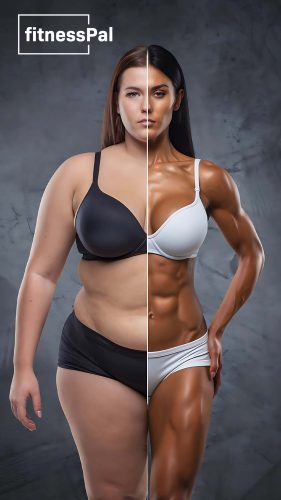
Nutrition Framework for Success
Ready to fuel your transformation journey? Let's build your nutrition strategy from the ground up. Getting your food right is crucial for seeing those changes in the mirror.
First, let's talk calories. According to the National Academy of Sports Medicine, your daily calorie needs depend on your goals. For fat loss, aim for a modest deficit of 300-500 calories below maintenance. Want to build muscle? Add 300-400 calories to your maintenance level.
Protein is your best friend during a transformation. Research from the Journal of the International Society of Sports Nutrition suggests aiming for 1.6-2.2 grams per kilogram of body weight daily. This helps preserve muscle while losing fat and supports new muscle growth.
Split your remaining calories between carbs and fats:
- 40-50% from carbs for energy
- 20-30% from healthy fats for hormone function
Meal timing matters too. Try eating 3-4 main meals with 1-2 snacks spread throughout the day. This keeps your energy stable and makes hitting your nutrition targets easier. A study from the International Journal of Sport Nutrition and Exercise Metabolism found that eating protein every 3-4 hours optimizes muscle growth.
Keep it simple with supplements. A quality protein powder and creatine monohydrate are usually enough. The Rowlett Transformation Center recommends focusing on whole foods first and using supplements to fill gaps.
Track your food intake for at least the first few weeks. This helps you understand portion sizes and ensures you're hitting your targets. Apps like MyFitnessPal make this process straightforward.
Remember, nutrition isn't about perfection. Aim to follow your plan 80-90% of the time, leaving room for flexibility. This approach helps you stick to your goals long-term while still enjoying life.
Common Challenges and Solutions
Let's tackle the roadblocks you might face during your transformation journey and how to overcome them. Every fitness journey has its hurdles, but with the right strategies, you can push through them.
Hitting plateaus is one of the most common challenges you'll face. When progress stalls, try changing your workout routine every 4-6 weeks. According to the National Academy of Sports Medicine, this "muscle confusion" principle helps prevent adaptation and keeps your body responding to exercise (NASM).
Motivation naturally fluctuates throughout your journey. Create a strong support system by joining fitness communities or finding a workout buddy. Research shows that people with workout partners are 95% more likely to stick to their fitness goals (Rowlett Transformation Center).
Social pressure can derail your progress, especially during celebrations or holidays. Plan ahead for these situations by eating a healthy meal before social events or bringing your own nutritious dishes. Remember, one off-track meal won't ruin your progress.
Life gets busy, and that's okay. When time is tight, focus on compound exercises that work multiple muscle groups. A 30-minute workout with exercises like squats and deadlifts can be just as effective as longer sessions. Studies show that even short, intense workouts can maintain muscle mass during busy periods (Journal of Strength and Conditioning Research).
Sleep disruption can slow your progress. Aim for 7-9 hours of quality sleep per night. Poor sleep can increase stress hormones and reduce muscle recovery, making your transformation harder. Create a consistent bedtime routine to improve sleep quality.
Remember, setbacks are normal. The key is to get back on track quickly rather than letting one slip-up turn into complete derailment. Your transformation is a marathon, not a sprint.
Tracking Progress Effectively
Your body transformation journey needs regular monitoring to stay on track and maintain motivation. Taking consistent measurements helps you make informed adjustments to your plan and celebrate your wins along the way.
Progress Photos: Your Visual Timeline
Take progress photos every 2-4 weeks in the same lighting, poses, and clothing. According to the National Academy of Sports Medicine, photos should include front, side, and back views to capture changes from all angles. Morning photos on an empty stomach provide the most consistent results.
Body Measurements That Matter
Track these key measurements monthly:
- Waist circumference
- Hip circumference
- Chest/bust
- Upper arms
- Thighs
The Journal of Strength and Conditioning Research recommends using a flexible tape measure and measuring at the same time of day for accuracy.
Performance Metrics to Monitor
Keep a workout log tracking:
- Weight lifted
- Reps completed
- Rest periods
- Energy levels
- Workout duration
According to Rowlett Transformation Center, these numbers help identify strength gains and areas needing attention.
Smart Adjustments
Review your progress every 4-6 weeks. If you're not seeing changes:
- Reassess your calorie intake
- Adjust workout intensity
- Check sleep quality
- Monitor stress levels
Remember, progress isn't always linear. Focus on trends over time rather than daily fluctuations. Small, consistent improvements add up to significant changes over your one-year journey.

Mental Preparation and Mindset
Your mindset can make or break your body transformation journey. Let's dive into proven strategies that will help you stay focused and motivated throughout your year-long journey.
Start by setting clear, measurable goals that excite you. Research from the Journal of Clinical Psychology shows that people who write down their goals are 42% more likely to achieve them. Break down your one-year goal into monthly milestones that feel challenging yet achievable.
Building sustainable habits is your next priority. Start small - aim for just 1% improvement each day. James Clear, author of "Atomic Habits," suggests linking new habits to existing ones. For example, pack your gym bag right after brushing your teeth each night.
Tracking your progress boosts motivation significantly. According to a study by the American Psychological Association, people who monitor their progress are more likely to succeed. Take weekly progress photos, log your workouts, and celebrate small wins along the way.
Expect challenges and prepare for them. Create a "when-then" plan for common obstacles. When you feel too tired to workout, then you'll commit to just 10 minutes. Often, you'll find yourself completing the full session once you start.
Remember that consistency beats perfection. The National Academy of Sports Medicine emphasizes that showing up regularly, even for shorter workouts, leads to better long-term results than sporadic intense sessions.
Build a support system to stay accountable. Find a workout buddy, join online fitness communities, or hire a coach. According to Rowlett Transformation Center, people with strong support networks are 80% more likely to stick to their fitness goals.
Practice self-compassion when facing setbacks. View them as learning opportunities rather than failures. This mindset shift helps maintain long-term motivation and prevents the all-or-nothing thinking that often derails transformation journeys.
Success Stories and Case Studies
Ready to see what's possible in a year? Let's dive into some inspiring transformations that show what dedication and smart planning can achieve.
Meet Sarah Thompson, who lost 65 pounds in 12 months through consistent strength training and nutrition planning. "The key was making small, sustainable changes," she shares. According to her story on Rowlett Transformation Center, Sarah started with just three workouts per week and gradually increased her activity level.
Mike Chen's journey proves that muscle gain is achievable at any age. At 42, he added 18 pounds of lean muscle in his first year of training. His success came from following a structured program and maintaining a protein-rich diet. "I focused on compound movements and progressive overload," Mike explains in his feature on Imanitribe.
The most successful transformers share common habits:
- They track their progress with photos and measurements
- They prioritize protein intake and meal planning
- They maintain consistent sleep schedules
- They adjust their programs based on results
Common pitfalls to avoid:
- Trying to rush results with extreme diets
- Skipping rest days
- Comparing progress to others
- Neglecting proper form for heavier weights
Remember Lisa Martinez's advice from her viral transformation story: "Focus on building habits you can maintain forever, not just for the next 12 months." Her complete journey, documented on Rowlett Transformation Center, showcases how sustainable changes lead to lasting results.
These success stories prove that amazing results are possible with dedication and the right approach. The key? Consistency over perfection, patience over quick fixes, and lifestyle changes over temporary solutions.